Quick Answer
If your EPFO grievance is not resolved, the correct next step depends on whether the grievance is Under Process, Disposed, Rejected, or Receiving No Response. Most unresolved EPF complaints are caused by employer dependency, record mismatches, pending transfers, missing documents, or processing backlogs. Before filing another grievance, identify the underlying bottleneck and choose the appropriate escalation path.
Read here to know what to do if the employer is not approving the PF claim.
What This Guide Covers
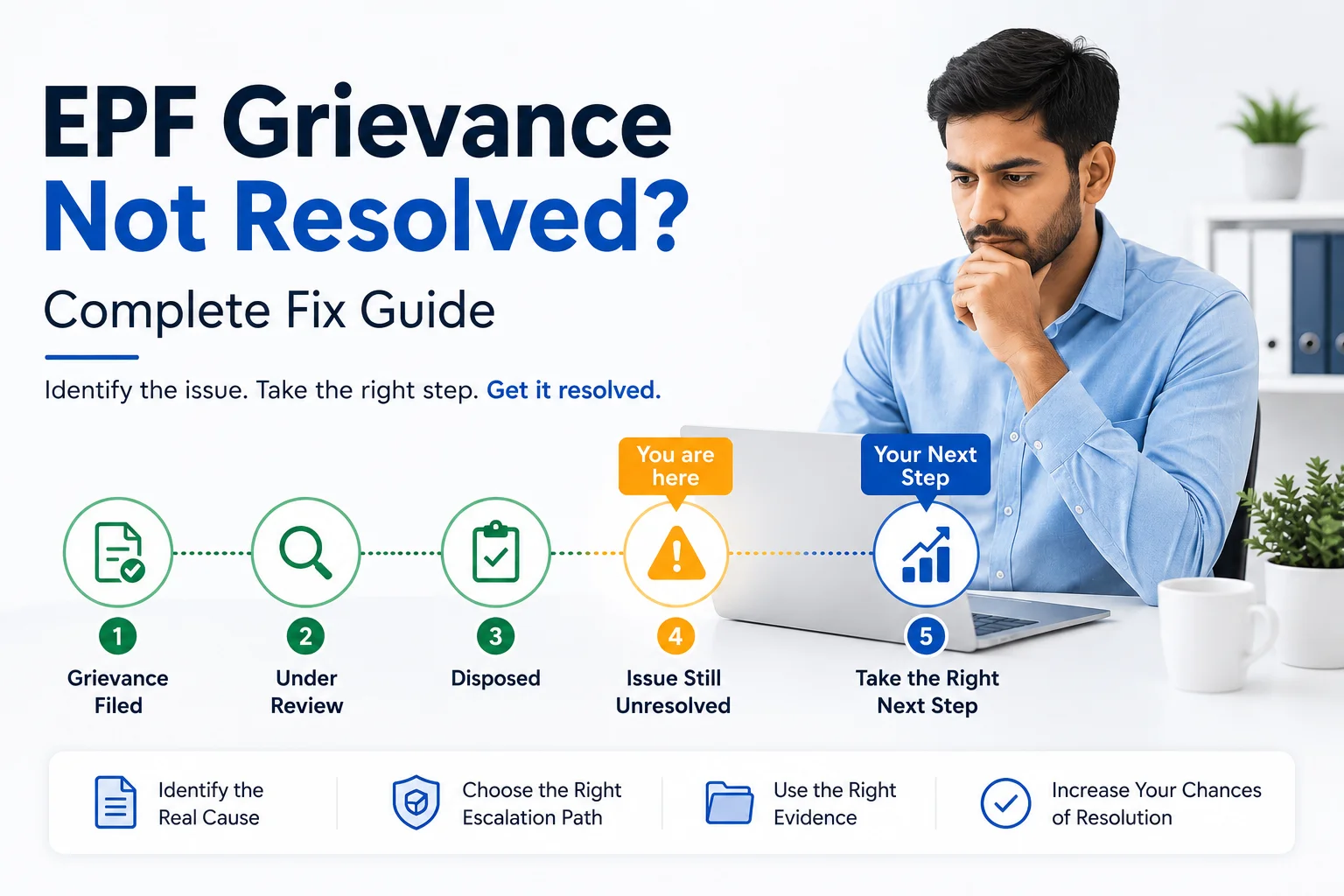
This guide explains:
- What to do if your grievance is still under process
- What "Disposed" actually means
- What to do if your grievance is rejected
- When to escalate to the Regional PF Office
- When to use CPGRAMS
- When RTI may help
- How to identify the real reason your PF issue remains unresolved
1. What To Do Based On Your Grievance Status
| Situation | Next Step |
|---|---|
| Under Process (<30 days) | Wait and monitor |
| Under Process (30-60 days) | Review records and prepare follow-up |
| Under Process (60+ days) | Escalate |
| No response received | Escalate |
| Disposed, but the issue remains | File a fresh grievance with evidence |
| Rejected | Identify the rejection reason |
| Multiple grievances failed | Higher-level escalation |
The fastest way to resolve an EPFO grievance is usually to identify the bottleneck rather than repeatedly filing new complaints.
2. Why Your EPFO Grievance Is Not Being Resolved
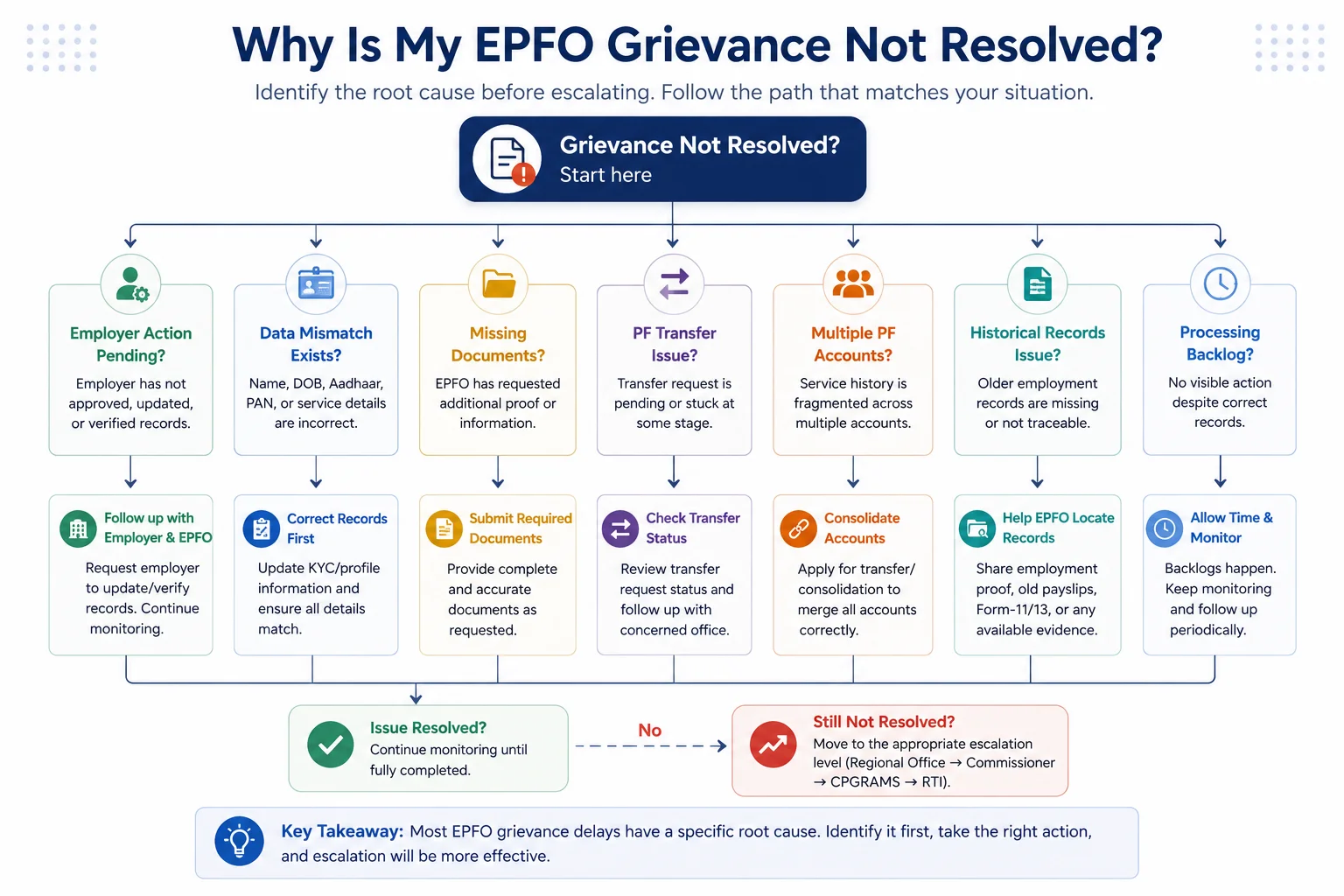
Most unresolved EPFO grievances are symptoms of a larger issue. Before escalating, identify which of the following applies to your case.
| Possible Cause | Typical Sign |
|---|---|
| Employer action pending | The employer has not approved, updated, or verified records |
| Data mismatch | Name, DOB, Aadhaar, PAN, or service details differ |
| Missing documents | EPFO requests additional proof |
| PF transfer issue | Transfer remains pending despite the grievance |
| Multiple PF accounts | Service history appears fragmented |
| Historical records issue | Older employment records are missing |
| Regional office backlog | No visible action despite correct records |
Not Sure What's Actually Blocking Resolution?
Many unresolved grievances are symptoms of a larger issue, such as pending employer action, multiple PF accounts, transfer failures, or profile mismatches. Identifying the bottleneck is often faster than filing another complaint.
Quick Diagnostic
If employer action is pending → follow up with the employer and EPFO
If records are incorrect → complete correction first
If transfer is stuck → investigate transfer status
If multiple PF accounts exist → consolidate records
If everything appears correct → begin escalation
3. My Grievance Is Still Under Process
"Under Process" simply means EPFO has not completed the review of the grievance.
The correct action depends on how long the status has remained unchanged.
| Time Pending | Recommended Action |
|---|---|
| Less than 15 days | Wait |
| 15-30 days | Review claim, transfer, and employer status |
| 30-60 days | Gather supporting evidence |
| More than 60 days | Escalate |
| More than 90 days | Formal escalation recommended |
What Does "Follow Up" Mean?
A proper follow-up is not filing duplicate grievances.
Instead:
- Review the existing grievance response.
- Check whether EPFO requested any action.
- Verify employer action status.
- Collect additional supporting evidence.
- Prepare escalation if no progress occurs.
When Should You Escalate?
Escalation becomes reasonable when:
- The grievance remains unchanged for 60+ days
- Employer cooperation is missing
- Multiple PF accounts are involved
- Transfer requests remain stuck
- Previous follow-ups produced no progress
Key Takeaway
An "Under Process" grievance is not automatically a problem. The concern arises when the status remains unchanged for weeks while the underlying PF issue also shows no progress.
4. My Grievance Says "Disposed," But Nothing Changed
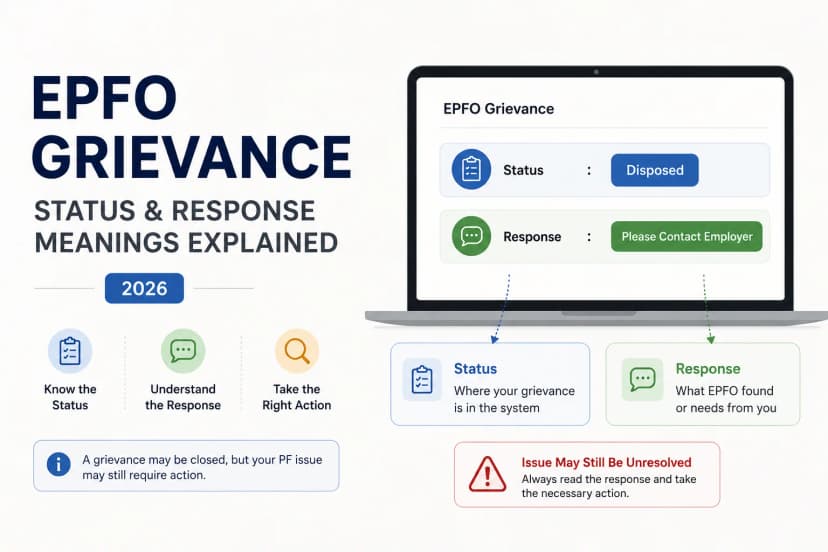
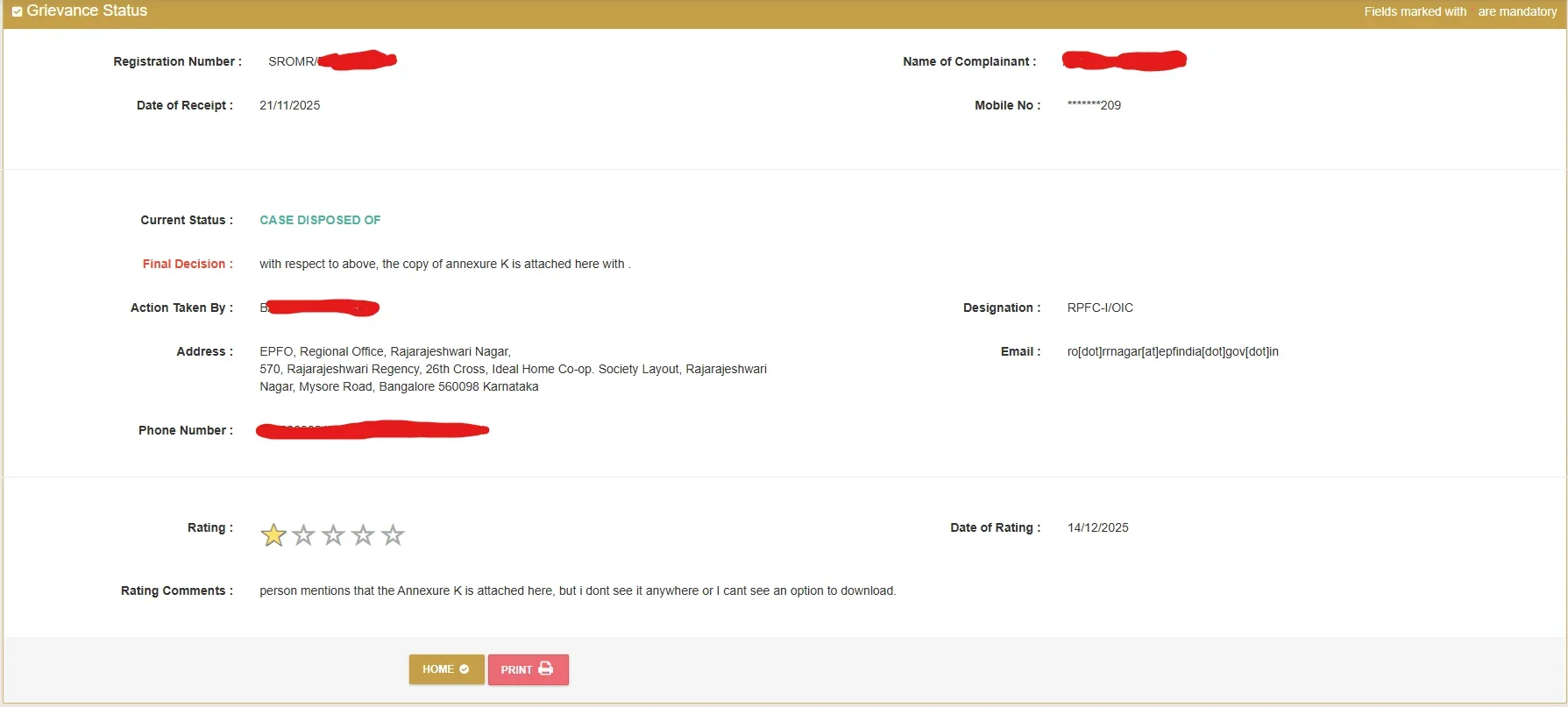
A grievance marked as Disposed does not always mean the underlying PF issue has been resolved. This is one of the most misunderstood EPFO grievance statuses.
What Does "Disposed" Mean?
Disposed means EPFO has responded and administratively closed the grievance.
It does not necessarily mean:
- The PF claim was approved
- PF transfer was completed
- Employer action was completed
- Account records were corrected
- The issue was resolved
This distinction is important.
A grievance status tracks the complaint.
It does not always track the outcome.
Disposed vs Resolved
The Most Common Misunderstanding. Many EPFO members assume:
Disposed = Problem Solved
This is often incorrect.
A grievance tracks the complaint.
Your PF claim, transfer, correction request, or employer action follows a separate process.
Always verify:
- Has the claim been approved?
- Has the transfer been completed?
- Has the correction been applied?
- Has the employer completed the required action?
Still seeing "Disposed," but your PF issue isn't resolved? Kustodian can review your case and help identify the next steps to resolve pending EPF claims, transfers, or record corrections.
Why Issues Remain After Disposal
The most common reasons include:
| Situation | What Usually Happened |
|---|---|
| Employer action pending | EPFO responded, but the employer has not acted |
| Transfer still pending | Review completed, but transfer not finished |
| A record mismatch exists | Correction required before action |
| Verification needed | Processing continues outside the grievance |
| Generic response received | Explanation provided, but the issue was not fixed |
What Should You Check First?
Before filing another grievance, verify:
i. Claim Status: If the grievance relates to a withdrawal claim, check whether the claim status has changed since the response.
ii. Transfer Status: If the grievance relates to a PF transfer, confirm whether the transfer has moved to a new stage.
iii. Employer Action: Many EPFO actions depend on employer verification or employer updates.
iv. Requested Corrections: Review whether EPFO asked for:
- KYC updates
- Profile corrections
- Additional documents
- Employer verification
v. Actual Outcome: Ask one simple question:
Is the original PF problem solved?
If the answer is no, further action may still be required regardless of grievance status.
What To Do If Your Grievance Was Disposed of but Not Resolved
Step 1: Save Previous Grievance Details
Step 2: Identify The Missing Outcome
Step 3: Add New Evidence
Step 4: File A Fresh Grievance
Key Takeaway
Disposed means EPFO responded. It does not automatically mean the issue was resolved.
If the underlying PF problem still exists, review the response, gather updated evidence, and file a fresh grievance referencing the previous complaint.
5. My Grievance Was Rejected
A rejected grievance does not necessarily mean your PF request is invalid.
In most cases, it means EPFO could not process the grievance in its current form.
Why EPFO Grievances Get Rejected
| Reason | What To Do |
|---|---|
| Missing documents | Re-file with supporting evidence |
| Wrong grievance category | Submit under the correct category |
| Employer-related issue | Follow up with the employer and EPFO |
| Data mismatch | Correct the records first |
| Transfer-related issue | Review transfer status and escalate if required |
When Should You Escalate?
Escalation may be more appropriate when:
- Multiple grievances have already failed
- The rejection reason is unclear
- Employer cooperation is unavailable
- The issue has remained unresolved for months
- Multiple PF accounts or historical records are involved
Key Takeaway
A rejected grievance is usually a signal to fix the underlying issue, not abandon the case. Identify the rejection reason first, then decide whether to re-file or escalate.
6. No Response After Filing An EPFO Grievance
If EPFO has not responded to your grievance, the correct action depends on how long you have been waiting.
Response Timeline Guide
| Time Since Filing | Recommended Action |
|---|---|
| Less than 15 days | Wait |
| 15–30 days | Monitor status and review records |
| 30–60 days | Gather evidence and prepare follow-up |
| 60–90 days | Escalate |
| More than 90 days | Formal escalation recommended |
When Is Escalation Appropriate?
Escalation is generally justified when:
- No meaningful response has been received for 60+ days
- Multiple follow-ups produced no progress
- Employer cooperation is missing
- Historical PF records are involved
- The issue remains unchanged despite repeated requests
Key Takeaway
No response does not automatically mean your grievance has been ignored. However, if there is no meaningful progress after several weeks, escalation is usually more effective than continued waiting.
7. How To Escalate An EPFO Complaint
If your EPFO grievance is not resolved, escalation should be done in stages.
Do not jump directly to the highest level.
Start with the lowest escalation that matches your situation and move upward only if no meaningful progress occurs.
EPFO Escalation Ladder
| Level | Escalation Method | Best Used When |
|---|---|---|
| Level 1 | Fresh grievance with additional evidence | Initial grievance failed |
| Level 2 | Regional PF Office | No meaningful progress |
| Level 3 | Regional PF Commissioner | Long-pending or repeated failure |
| Level 4 | CPGRAMS | Formal government escalation |
| Level 5 | RTI | Information is needed to understand delays |
Level 1: File A Fresh Grievance With Additional Evidence
Example
Instead of writing:
My issue is still not resolved.
Write:
Grievance XXXXX was disposed on DD/MM/YYYY. However, my PF transfer request submitted on DD/MM/YYYY remains pending. Updated supporting documents are attached.
Move To Level 2 If
- No meaningful progress after several weeks
- Response remains generic
- The issue remains unchanged
Level 2: Contact The Regional PF Office
Clearly explain:
- What action was requested
- What response was received
- Why the issue remains unresolved
Focus on facts and timelines rather than frustration.
Move To Level 3 If
- No progress occurs
- The issue remains unresolved after repeated office-level attempts
Level 3: Escalate To The Regional PF Commissioner
This level is appropriate when:
- The case has been pending for months
- Multiple grievances have failed
- Office-level intervention did not help
- Significant delays continue without explanation
Move To Level 4 If
- The issue remains unresolved
- Responses remain repetitive
- No meaningful action occurs
Level 4: Escalate Through CPGRAMS
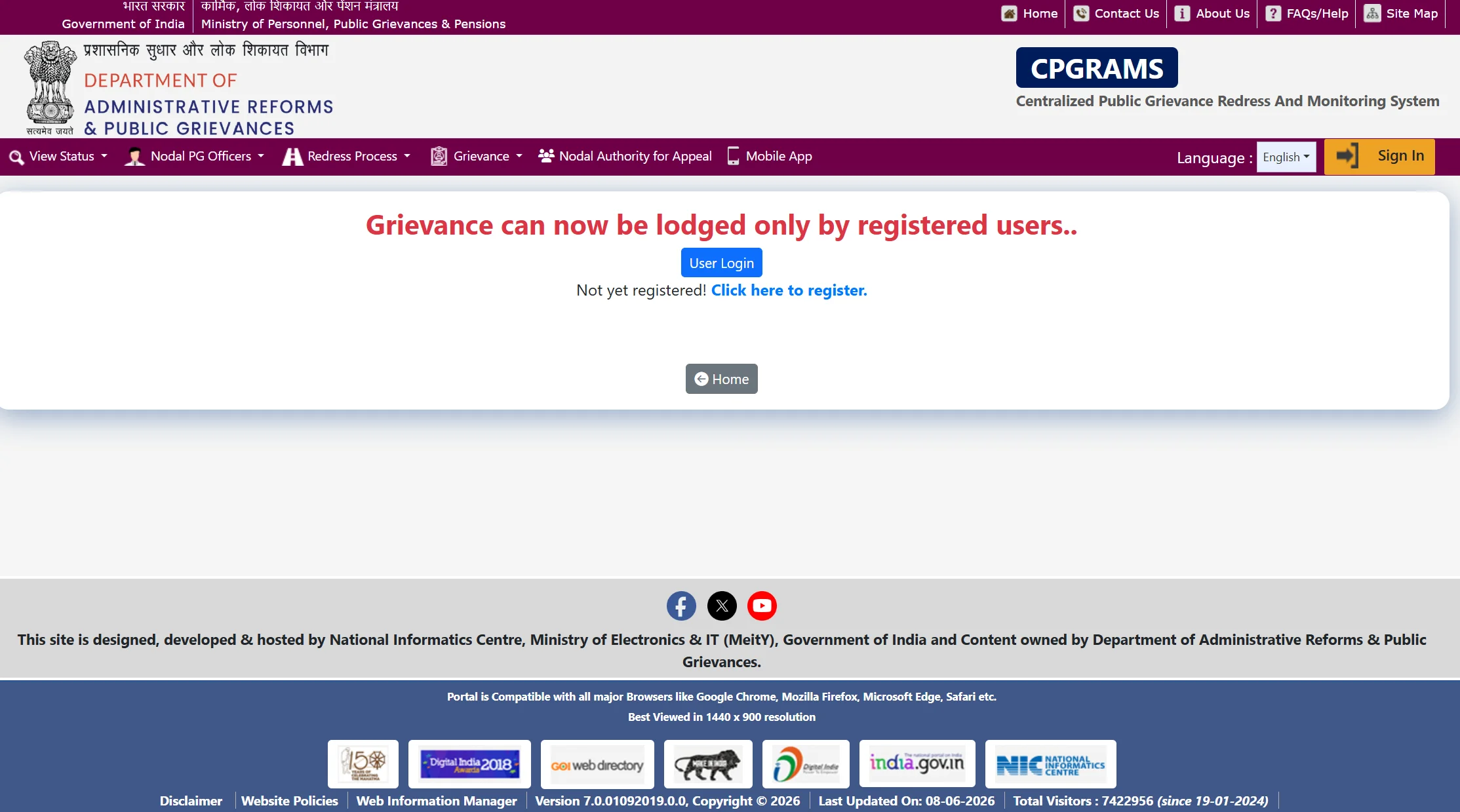
CPGRAMS is the Government of India's public grievance platform used for escalating complaints against government departments and agencies. It is one of the strongest escalation options available after normal EPFO channels have failed. Focus on demonstrating:
- What happened
- What actions were already taken
- What remains unresolved
Move to Level 5 If You need additional information to understand why the case remains unresolved.
Level 5: Use RTI To Obtain Information
RTI is not a grievance resolution tool. RTI helps obtain information. It does not directly force EPFO to approve claims, complete transfers, or resolve disputes.
If your grievance has already been disposed of, rejected, or has been pending for months, make sure you're escalating the right issue. Escalation works best when supported by the correct evidence, timelines, and documentation.
Which Escalation Method Should You Use?
| Situation | Best Next Step |
|---|---|
| Grievance disposed but unresolved | Fresh grievance |
| Grievance rejected | Correct the issue and re-file |
| No response for 60+ days | Regional office |
| Multiple failed grievances | Commissioner |
| Long-pending unresolved case | CPGRAMS |
| Need information about the delay | RTI |
Can You Reopen An EPFO Grievance?
Usually no.
EPFO generally does not reopen disposed grievances. File a fresh grievance referencing the previous grievance number, response, unresolved issue, and any new supporting evidence.
8. Real EPFO Grievance Scenarios
Scenario 1: Grievance Pending For 60 Days
Situation: The grievance has remained under process for more than two months with no meaningful update.
Best Next Step: Gather supporting records and begin escalation through the regional PF office.
Scenario 2: Employer Is Not Responding
Situation: EPFO requires employer action, but the employer has not updated records or provided verification.
Best Next Step: Maintain communication records and continue escalation through EPFO while pursuing employer follow-up.
Scenario 3: PF Claim Remains Unresolved After Multiple Grievances
Situation: Several grievances have been filed, but responses remain generic, and the claim is still pending.
Best Next Step: Escalate through the Regional PF Commissioner or CPGRAMS.
Scenario 4: Grievance Rejected Due To Data Mismatch
Situation: The grievance is rejected because EPFO records do not match the submitted information.
Best Next Step: Correct records first and then submit a fresh grievance if needed.
9. Some Cases Require Deeper Investigation
Cases involving multiple PF accounts, missing service history, employer disputes, pension complications, or repeated grievance failures often require identifying the root cause before further escalation.
Need Help Understanding Why Your Grievance Is Stuck?
If your grievance has already been:
- Rejected
- Disposed without resolution
- Pending for months
- Escalated multiple times
A case review can help identify the fastest available resolution path. A proper review should answer:
- What is causing the delay?
- Which escalation level is appropriate?
- What evidence is missing?
- Whether employer action is required
- Whether the issue is administrative, technical, or documentation-related
The sooner the root cause is identified, the easier it becomes to choose the right next step.
10. Frequently Asked Questions
Does "Disposed" Mean My EPF Issue Is Resolved?
No. Disposed means EPFO responded and closed the grievance. It does not automatically mean the underlying PF issue was fixed.
Can I File Multiple EPFO Grievances?
Yes, but duplicate grievances without new information are usually ineffective. Each new grievance should include additional evidence or context.
What Happens If My Grievance Is Rejected?
Identify the rejection reason first. Many rejected grievances can be resolved by correcting records, adding evidence, or selecting the correct grievance category.
What Should I Do If My Employer Is Not Cooperating?
Document all communication attempts and continue the grievance process. Many EPFO issues require employer action before they can be resolved.
Can A PF Transfer Issue Be Resolved Through A Grievance?
Yes, but transfer-related cases often involve multiple parties and may require escalation if delays continue.
Is CPGRAMS Better Than An EPFO Grievance?
Not necessarily. CPGRAMS is usually most effective after normal EPFO grievance channels have been exhausted.
Does Filing More Grievances Speed Up Resolution?
Usually not. Strong evidence and proper escalation are generally more effective than repeatedly filing similar grievances.
When Should I File An RTI?
RTI may be useful when you need information about delays, processing status, actions taken, or the office handling your case.
What Documents Help Strengthen An EPFO Grievance?
Useful documents include claim references, transfer references, screenshots, employer communication, service records, and previous grievance responses.
What Is The Best Escalation Path For A Long-Pending Grievance?
In most cases:
- Fresh grievance with evidence
- Regional PF Office
- Regional PF Commissioner
- CPGRAMS
- RTI (for information)
Can An EPFO Grievance Resolve Employer-Related Issues?
Sometimes. However, many employer-related problems require direct employer action before EPFO can complete the requested process.
What If Multiple Grievances Have Failed?
Review the root cause, gather complete documentation, and move to higher-level escalation instead of repeatedly filing similar grievances.
What If EPFO Keeps Giving The Same Response?
Repeated generic responses often indicate that the underlying issue has not changed. Review whether additional evidence, corrections, or escalation are required.
Can I File A Grievance Against My Employer?
Yes. Employer-related issues can be raised through EPFO grievance channels, particularly when employer action is preventing resolution.
Does CPGRAMS Force EPFO To Resolve My Case?
CPGRAMS creates a higher-level review mechanism but does not automatically guarantee approval or resolution.
What If My Grievance Was Marked Disposed Within One Day?
Review the response carefully. Some grievances are administratively closed when the issue falls outside the selected category or requires additional information.
How Many Times Can I File An EPFO Grievance?
There is no fixed limit. However, repeated grievances without new information are usually less effective than structured escalation.
Some Cases Are More Complex Than The Grievance Itself
Most EPFO grievances are straightforward. However, delays often become difficult when multiple systems, employers, or historical records are involved.
Complex cases commonly include:
- Multiple PF accounts
- Missing service history
- Unmerged employment records
- Long-pending transfers
- Employer disputes
- Pension-related complications
- Deceased member claims
- Major record mismatches
In these situations, identifying the root cause is often more important than filing additional grievances.
Need Help Understanding Why Your Grievance Is Stuck?
If your grievance has been:
- Rejected
- Disposed without resolution
- Pending for months
- Escalated multiple times
Kustodian can help identify the root cause, determine the appropriate escalation path, and highlight any missing documentation, employer actions, or record corrections needed to move the case forward.
PF Interest Loss Calculator
See how much interest you lose every month your claim sits unresolved.