EPF Claim Rejected? Here’s What It Means
If your claim is rejected, you’re not alone—this is a common outcome during withdrawal or transfer.
In most cases, a rejection indicates a mismatch or validation issue in your records, not a permanent denial. Once the issue is identified, the claim can typically be corrected and submitted again. This guide helps you identify the exact problem and move to the right solution.
Why Was My EPF Claim Rejected? (Quick Answer)
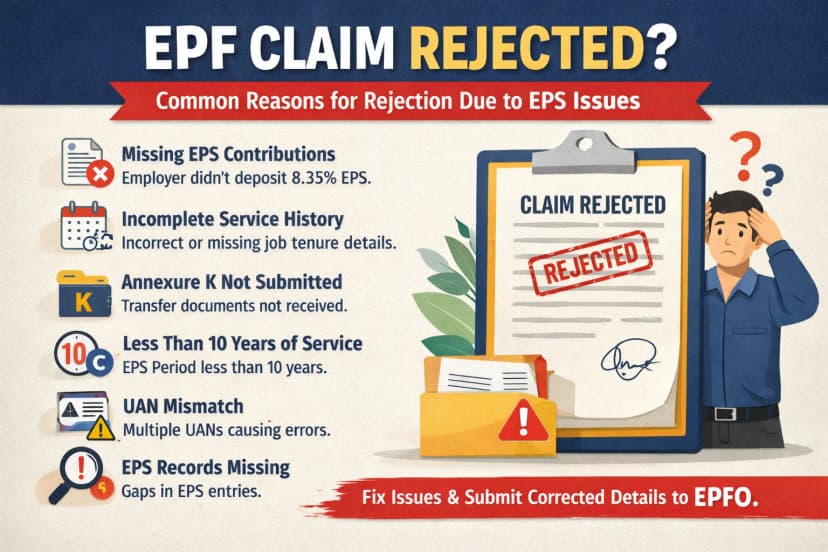
EPF claims are rejected due to mismatches in personal details, employment records, or verification issues. The most common causes include KYC errors, name mismatches, missing exit dates, overlapping employment, employer approval delays, and EPS eligibility issues.
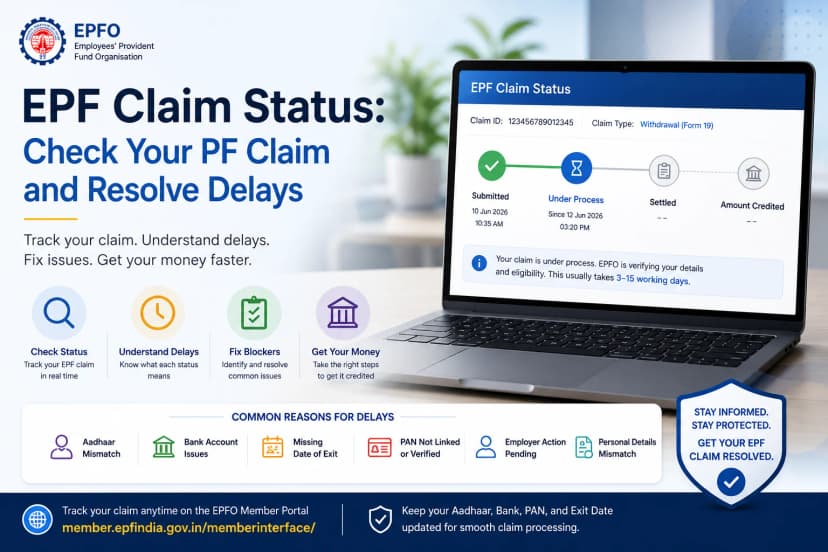
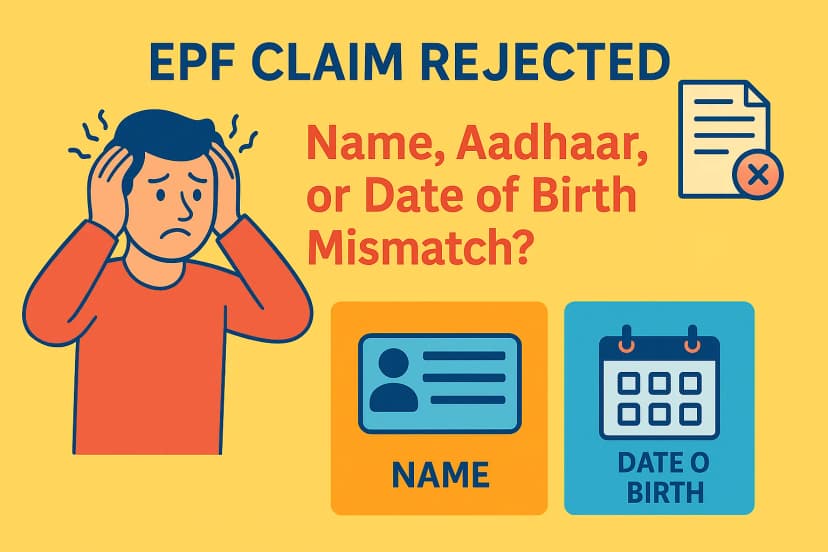
- Name or Aadhaar mismatch
- KYC or bank verification issue
- Missing exit date
- Overlapping employment records
- Employer approval pending
- EPS eligibility issue
Last updated: March 2026
Based on recent EPF claim rejection patterns and processing workflows.

1. Identify Why Your PF Claim Was Rejected (Start Here)
If your PF claim has been rejected, the fastest way to move forward is to identify the exact issue and fix it before reapplying.
Most rejections fall into a few common categories. Choose the one that best matches your situation:
- Claim rejected due to name mismatch in EPF → fix name mismatch in EPF.
- Claim rejected due to overlapping employment records → Resolve PF overlap issue
- Claim rejected due to EPS/pension eligibility issue → Check EPS rejection rules
- Claim stuck due to employer approval pending → What to do if the employer is not approving the PF
- Claim rejected due to KYC or bank mismatch → Fix KYC issues in EPF
Most rejections happen due to mismatch or employment record issues—start with these if unsure.
If your issue involves multiple errors or older employment records, resolving it may require multiple steps. Running an audit helps to understand what can be wrong.
2. EPF Rejection Messages Explained (What Your Error Actually Means)
In most EPF claim cases we’ve seen, these messages directly map to one of the issues below. When your EPF claim is rejected, the system shows a short message in the claim status. These messages can be unclear, but they usually point to a specific issue.
Below are the most common messages and what they mean:
MEMBER DETAILS MISMATCH
Shown as: “Member details mismatch”, “Name mismatch with Aadhaar.”
Meaning: Personal details do not match across records
SERVICE OVERLAP DETECTED
Shown as: “Service overlap detected.”
Meaning: Employment records conflict due to overlapping dates
EPS NOT ELIGIBLE
Shown as: “EPS not eligible”, “Pension contribution mismatch.”
Meaning: Pension eligibility criteria not met
PENDING WITH EMPLOYER / REJECTED BY EMPLOYER
Shown as: “Pending with employer”, “Rejected by employer.”
Meaning: Employer approval is incomplete or denied
KYC NOT VERIFIED / BANK DETAILS ISSUE
Shown as: “KYC incomplete”, “Bank details not verified.”
Meaning: KYC or bank verification is incomplete
Match your rejection message above to identify the correct fix.
EPF Claim Rejection - Quick Diagnosis
- Member details mismatch → Identity issue
- Service overlap detected → Employment issue
- EPS not eligible → Eligibility issue
3. Top Reasons Why EPF Claims Get Rejected
Identifying the correct one helps you fix the problem faster.
Name mismatch between Aadhaar and EPF: Personal details such as name, date of birth, or gender do not exactly match across records. Even small differences can trigger rejection. This is one of the most common EPFO portal errors.
→ Correct details using the joint declaration
Overlapping employment records
Employment history shows conflicting dates, usually due to incorrect exit or joining details.
EPS/pension eligibility issues
Pension contribution does not meet eligibility rules due to salary limits or record inconsistencies.
Employer approval pending or rejected
The claim requires employer verification, which has not been completed or was rejected. Employer delays are a frequent cause of claim status issues.
KYC or bank account mismatch
Bank details or KYC information are incomplete or not verified.
4. Most PF Rejection issues Fall Into These 3 Categories
Most claim rejections can be grouped into three types:
- Identity issues (name, Aadhaar, KYC)
- Employment issues (overlap, service history)
- Eligibility issues (EPS, employer approval)
5. What To Do After Your PF Claim Is Rejected
- Check the exact rejection message in your claim status
- Resolve the specific issue (mismatch, overlap, or approval)
- Reapply once the records are corrected
- Track the status until it moves to settlement
In most cases, resolving the issue once is enough for approval.
6. Quick Fix Guide for EPF Claim Rejection
| Problem | What It Means | What To Do |
|---|---|---|
| Name mismatch | Identity mismatch in records | Fix details |
| Overlap issue | Conflicting employment records | Correct records |
| EPS issue | Pension eligibility mismatch | Check rules |
| Employer delay | Approval pending | Escalate |
| KYC issue | Verification incomplete | Update details |
7. Before You Reapply: Quick Checklist
Before reapplying, verify the following:
- Your name matches exactly across Aadhaar and EPF records
- Employment dates are correct and do not overlap
- KYC and bank details are fully verified
- Employer approval (if required) is completed
Taking a few minutes to verify these can prevent repeated rejections.
8. When Your PF Claim Is Stuck with the Employer
Sometimes, your claim may not be rejected but remains pending because the employer has not approved it. This typically happens when the employer has not verified your details or has not taken action on the claim request.
In such cases, the issue is not with your data but with the approval process.
→ What to do if the employer is not approving the PF
9. FAQs on EPF Claim Rejection
Q. Why was my EPF claim rejected after approval?
In some cases, a claim may be initially approved but later rejected due to backend validation issues. This can happen if discrepancies are found in records during final processing, such as mismatched details, contribution issues, or employer-level checks.
Q. Can I reapply after my PF claim is rejected?
Yes. Once you identify and fix the underlying issue, you can reapply for your EPF claim. Most rejections are resolved successfully after correcting the root cause.
Q. How long does it take to fix a PF claim rejection?
The time required depends on the issue. Simple corrections like KYC updates can be resolved quickly, while issues involving employers or employment records may take longer.
Q. Will I lose interest if my PF claim is rejected?
No. Your EPF balance continues to earn interest as per EPFO rules, even if your claim is rejected, as long as the account remains active and compliant.
Q. What is the most common reason for PF claim rejection?
The most common reasons are mismatches in personal details (such as name or Aadhaar) and issues with employment records, including overlapping service history.
Q. Does the PF office location matter for claim rejection?
In most cases, the PF office location does not directly cause rejection. However, differences in record handling or delays at specific offices can sometimes affect processing timelines.
Summary: Your Action Plan to Get Your PF Claim Approved
If your EPF claim has been rejected, the key is to focus on the root issue and resolve it correctly before reapplying.
- Identify the exact reason for rejection from your claim status
- Fix the underlying issue—whether it’s a mismatch, overlap, or eligibility problem
- Reapply your claim once the correction is complete
- Track the status to ensure it progresses to approval
Most EPF claim rejections are resolved successfully once the issue is corrected.
If your case involves multiple records or employer dependencies, resolving it can take time—getting expert help can simplify the process and avoid repeated rejections.